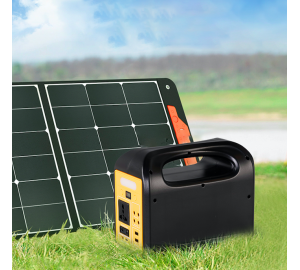
1、 Daily maintenance projects and cycles
1. Cleaning and inspection of solar panels
Cycle: once a month (once a week in dusty areas)
Method:
Confirm that there is no obstruction (such as fallen leaves, bird droppings, snow), and if the obstruction area is greater than 10%, it needs to be cleaned immediately.
Check the sealing of the junction box to prevent rainwater from seeping in and causing a short circuit.
Cleaning: Use a soft cloth or sponge dipped in clean water to wipe the surface, avoiding scratching with hard objects (which may damage the coating layer).
Check:
Tools: long handled cleaning brush, water bucket, insulated gloves.
2. Battery status monitoring
Cycle: once per quarter
Method:
Voltage detection: Use a multimeter to measure the battery voltage (such as the normal voltage of a 12V lithium battery being 11.4-12.6V).
Capacity test: By conducting a load discharge test (such as connecting a 10W light bulb and recording the discharge time), if the discharge time is less than 70% of the design value, the battery needs to be replaced.
Appearance inspection: No bulges, leakage, or corrosion (especially for lead-acid batteries).
Notes:
Lithium batteries have a lifespan of 5-8 years, while lead-acid batteries have a lifespan of 3-5 years, and replacement cycles need to be planned in advance.
In low-temperature environments (<-10 ℃), the capacity of lead-acid batteries decreases by more than 30%, and it is recommended to switch to low-temperature lithium batteries.
3. Inspection of light source and controller
Cycle: Once every six months
Method:
Check the status of the indicator lights (such as whether the charging indicator light and load indicator light are flashing normally).
Test the light control and time control functions (such as blocking the solar panel, the light source should light up within 30 seconds).
Check if the brightness is uniform at night. If there is flickering or dark areas, it may be due to LED chip aging or driver power failure.
Use a thermal imaging device to detect the temperature of the light source (normal operating temperature<60 ℃), as overheating may accelerate light decay.
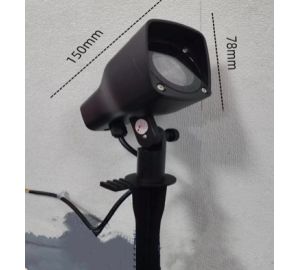
Light source:
controller:
Tools: multimeter, thermal imaging device, remote control (if available).
4. Inspection of lamp posts and foundations
Cycle: once a year
Method:
Check if the ground cage bolts are loose and if the concrete foundation is cracked.
Use a rebound tester to test the strength of concrete (C25 or above is qualified).
Check the verticality (deviation ≤ 3 ‰). If the inclination is greater than 5 ‰, it needs to be leveled or reinforced again.
Check if the surface coating has peeled off (coastal areas have a high risk of rust and require repainting every 3 years).
Lamp post:
Basics:
Tools: spirit level, torque wrench, rebound gauge.
Tel
TEL:18928154213
EMAIL:hank15@163.com
ADDRESS:No. 5, Factory Building, No. 80, Zhongheng Avenue, Baoyu Village, Henglan Town, Zhongshan City
 Add WeChat
Copyright © Zhongshan Selong BeiDi New Energy Co., Ltd.